

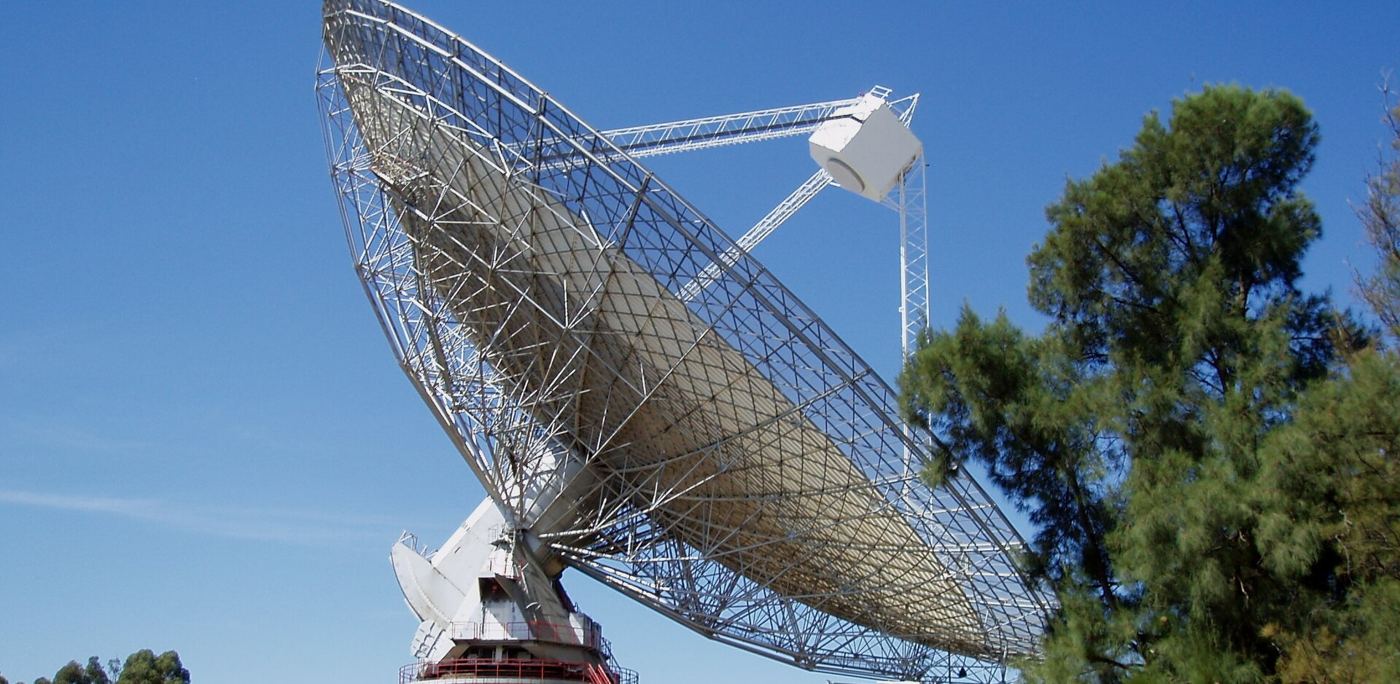
A star in the southern sky spins more than 260 times every second, sending regular pulses of energy toward Earth, and it was found in just 100 minutes thanks to a new mathematical method. The pulsar, named PSR J1622-7204, was announced on 19 November 2026 by researchers at the Weizmann Institute of Science in Israel, working with colleagues at the Max Planck Institute for Gravitational Physics in Germany and Chalmers University of Technology in Sweden. Their paper was published in Physical Review Letters. Pulsars are the collapsed, spinning cores of dead stars, and they act as cosmic lighthouses, sweeping beams of radiation across space with each rotation. Finding them is hard because astronomers must test an enormous number of possible spin rates and positions to match the faint signals. The discovery was made possible by a technique that treats the search as a problem in geometry rather than brute-force trial and error.
What the Evidence Shows
The new algorithm solves that search problem by turning it into geometry. Each possible combination of rotations can be represented as a point in a structure called a lattice, and the method searches for the solution that best fits the data, a task known in mathematics as the shortest vector problem. Led by Dr Barak Zackay of Weizmann’s Particle Physics and Astrophysics Department, the team used the method to find PSR J1622-7204 quickly, and the approach is already being used to discover more pulsars. Pulsars are prized by astronomers because their precise timing can test Einstein’s theory of relativity and could one day help spacecraft navigate by the stars. The faster a pulsar spins, the more precise a clock it makes, and one spinning 260 times a second is among the fastest known. Reporting and analysis from sources such as National Science Foundation track the same developments, and specialists following the newly discovered pulsar PSR J1622-7204 say the direction is now consistent across independent lines of evidence.
The Wider Context
The wider context is a research landscape in which replication and open data now decide reputations. Findings connected to the newly discovered pulsar PSR J1622-7204 are being checked by independent groups with shared datasets, and the teams involved publish their methods in full so rivals can test every step. That discipline is slower than a headline cycle, but it is why results in this area increasingly survive first contact with scrutiny.
What Happens Next
What happens next in the story of the newly discovered pulsar PSR J1622-7204 will be decided by follow-up work already under way: larger samples, longer observation and instruments that have not yet come online. The researchers involved are unusually united on one point, that the current results justify the next investment of time and money. Readers will not have to wait long for the first tests of that claim. You can follow related developments in our coverage of science.
There is a practical lesson in all of this for readers deciding what to do today. Start with the verified facts, be wary of anyone promising certainty, and prefer reversible steps while the evidence is still developing. Circumstances differ by country, income and personal situation, so general guidance should always be weighed against your own context before you act on it in any significant or lasting way.
