

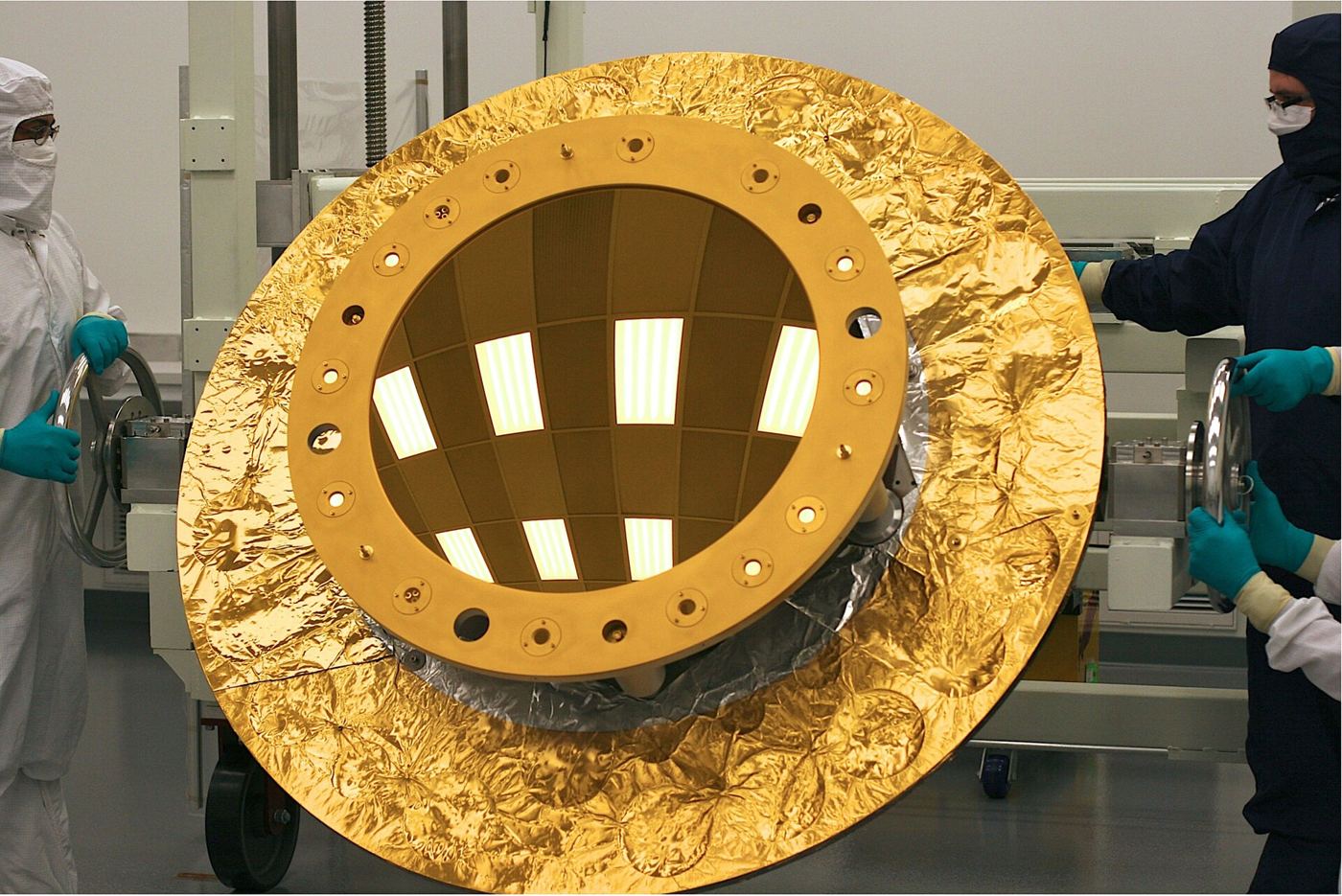
A giant planet that was hiding in plain sight inside two-year-old telescope data has been recovered by a new image-processing technique. Researchers at Northwestern University reported on 4 November 2026 in the journal Nature that their method, called Physics-based Learning for Imaging Planets, or FLIP, pulled the faint signal of the exoplanet 51 Eridani b out of James Webb Space Telescope observations where standard processing had failed. The planet, a young gas giant about twice the mass of Jupiter, orbits a star around 96 light-years away. Its light was drowned out by the glare of its host star, and tiny imperfections in the telescope made the problem worse. FLIP builds a detailed computer model of the telescope’s optics and uses it to subtract the starlight.
What the Evidence Shows
The technique improved the telescope’s sensitivity by up to 15 times in the tests the team ran, detecting the planet with a significance above five sigma. That matters because the Webb telescope’s archive may already hold images of planets nobody has noticed, and the same approach could work on the Nancy Grace Roman Space Telescope and the planned Habitable Worlds Observatory. The method was led by doctoral researcher Rodrigo Ferrer-Chavez and combines physics-based modelling with machine-learning tools, though it does not use a black-box AI model. Astronomers say the result shows that how data is processed can matter as much as the telescope itself, and that old observations deserve a second look. Reporting and analysis from sources such as National Science Foundation track the same developments, and specialists following the FLIP exoplanet imaging technique say the direction is now consistent across independent lines of evidence.
The Wider Context
The wider context is a research landscape in which replication and open data now decide reputations. Findings connected to the FLIP exoplanet imaging technique are being checked by independent groups with shared datasets, and the teams involved publish their methods in full so rivals can test every step. That discipline is slower than a headline cycle, but it is why results in this area increasingly survive first contact with scrutiny.
What Happens Next
What happens next in the story of the FLIP exoplanet imaging technique will be decided by follow-up work already under way: larger samples, longer observation and instruments that have not yet come online. The researchers involved are unusually united on one point, that the current results justify the next investment of time and money. Readers will not have to wait long for the first tests of that claim. You can follow related developments in our coverage of science.
There is a practical lesson in all of this for readers deciding what to do today. Start with the verified facts, be wary of anyone promising certainty, and prefer reversible steps while the evidence is still developing. Circumstances differ by country, income and personal situation, so general guidance should always be weighed against your own context before you act on it in any significant or lasting way.
