

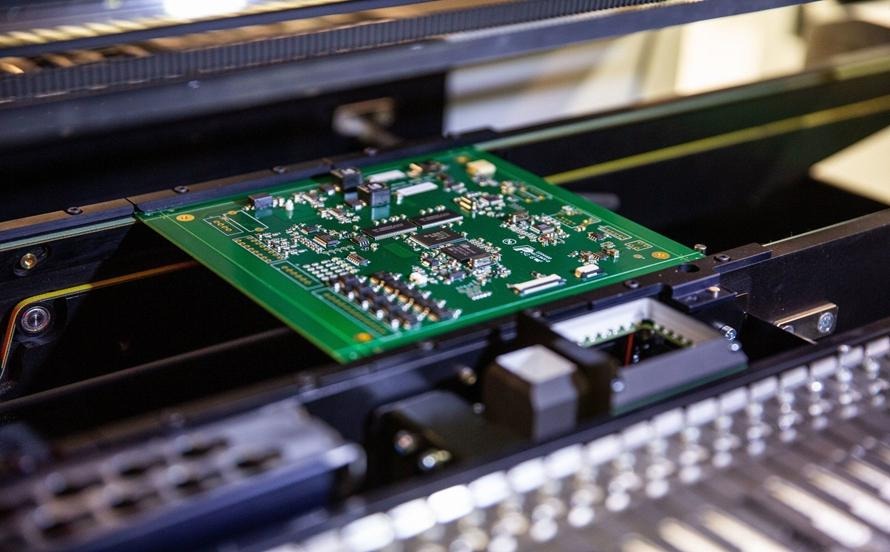
Printed circuit boards serve as the foundation of modern electronic devices, providing the electrical pathways that connect components and enable circuits to function. However, a bare PCB cannot perform any task until electronic components are properly installed and connected. This process, known as Component Mounting on PCB, is one of the most critical stages in electronics manufacturing.
From smartphones and medical devices to automotive systems and industrial equipment, virtually every electronic product depends on accurate and reliable component mounting. The quality of this process directly affects product performance, durability, and long-term reliability. Understanding Component Mounting on PCB is essential for engineers, manufacturers, and businesses involved in electronic product development and production.
What Is Component Mounting on PCB?
Component Mounting on PCB refers to the process of placing and attaching electronic components onto a printed circuit board to create a functional electronic assembly.
The components used may include:
- Resistors
- Capacitors
- Inductors
- Integrated circuits
- Connectors
- Sensors
- LEDs
- Power devices
Once mounted and soldered, these components form electrical connections with the conductive traces on the PCB, allowing signals and power to flow through the circuit.
The mounting process must be performed with high precision to ensure proper functionality, electrical reliability, and manufacturing efficiency.
Why Component Mounting on PCB Is Important
The success of any electronic product depends heavily on the quality of component mounting.
Incorrect placement, poor soldering, or damaged components can lead to operational failures, reduced reliability, and increased manufacturing costs.
Proper Component Mounting on PCB provides several benefits:
- Reliable electrical connections
- Improved product performance
- Higher manufacturing yields
- Enhanced durability
- Reduced defect rates
- Lower maintenance costs
As electronic products become smaller and more complex, accurate component mounting has become increasingly important in modern manufacturing.
The Evolution of PCB Component Mounting
Early electronic devices relied on manual assembly methods where technicians individually mounted and soldered components onto circuit boards.
While manual assembly is still used for specialized applications, most modern manufacturing facilities rely on automated systems capable of placing thousands of components per hour with exceptional precision.
Advancements in automation have transformed Component Mounting on PCB by improving:
- Accuracy
- Speed
- Consistency
- Production capacity
- Quality control
Today’s assembly technologies support increasingly compact and sophisticated electronic products.
Surface Mount Technology
Surface Mount Technology (SMT) is the most widely used method for Component Mounting on PCB.
In SMT assembly, components are mounted directly onto the surface of the circuit board rather than inserted through drilled holes.
This technology offers several advantages:
- Higher component density
- Smaller product size
- Faster production speeds
- Improved automation
- Reduced manufacturing costs
SMT components are generally smaller than traditional through-hole components, making them ideal for modern compact electronic devices.
Most consumer electronics products rely heavily on SMT assembly techniques.
Surface Mount Assembly Process
The SMT process begins with solder paste application.
A precision stencil deposits solder paste onto designated PCB pads where components will be placed.
Automated pick-and-place machines then position components according to assembly data generated from the PCB design.
Once placement is complete, the board enters a reflow oven where controlled heating melts the solder paste and creates permanent electrical connections.
After soldering, inspection and testing procedures verify assembly quality and functionality.
This highly automated process enables efficient and reliable Component Mounting on PCB for large-scale production.
Through-Hole Mounting Technology
Although SMT dominates modern electronics manufacturing, through-hole technology remains important in many applications.
Through-hole mounting involves inserting component leads through drilled holes in the PCB and soldering them on the opposite side.
This method provides strong mechanical connections and is commonly used for:
- Connectors
- Transformers
- Relays
- High-power components
- Industrial electronics
Through-hole components are often selected when additional mechanical strength or durability is required.
Many electronic products combine both SMT and through-hole technologies within the same assembly.
Automated Component Placement
Automation has become a key factor in modern Component Mounting on PCB operations.
Automated pick-and-place systems use advanced vision technologies and precision motion controls to place components accurately.
Benefits of automated placement include:
- Increased production speed
- Reduced human error
- Consistent quality
- Improved efficiency
- Lower labor costs
Modern placement equipment can handle extremely small components and advanced semiconductor packages with remarkable accuracy.
Automation is essential for meeting the demands of today’s high-volume electronics manufacturing industry.
PCB Design Considerations for Component Mounting
Successful Component Mounting on PCB begins during the design phase.
Engineers must consider assembly requirements when developing PCB layouts.
Important design considerations include:
- Component spacing
- Pad dimensions
- Orientation consistency
- Thermal management
- Accessibility for inspection
- Test point placement
Design for Manufacturability (DFM) principles help ensure that boards can be assembled efficiently and reliably.
Well-designed PCBs reduce manufacturing challenges and improve overall product quality.
Common Challenges in Component Mounting on PCB
Despite advances in manufacturing technology, several challenges can affect assembly quality.
Miniaturized components require precise placement and tight process control.
High-density circuit designs increase assembly complexity and inspection requirements.
Common challenges include:
- Component misalignment
- Solder bridging
- Tombstoning
- Insufficient solder joints
- Thermal stress
- Placement accuracy issues
Manufacturers address these challenges through equipment calibration, process optimization, and comprehensive quality assurance programs.
Continuous improvement efforts help maintain consistent assembly performance.
Quality Control and Inspection
Quality assurance is a critical aspect of Component Mounting on PCB.
Manufacturers use multiple inspection methods to verify assembly accuracy and detect defects.
Common inspection techniques include:
- Automated Optical Inspection (AOI)
- X-ray inspection
- Visual inspection
- Solder paste inspection
AOI systems identify placement errors, polarity issues, and soldering defects.
X-ray inspection is particularly useful for evaluating hidden solder joints beneath advanced packages such as Ball Grid Arrays (BGAs).
Comprehensive inspection procedures help ensure product reliability and customer satisfaction.
Testing After Component Mounting
After assembly is completed, testing verifies that the PCB functions as intended.
Testing procedures may include:
- In-Circuit Testing (ICT)
- Functional testing
- Flying probe testing
- Environmental testing
These methods help identify electrical faults, assembly defects, and performance issues before products are shipped.
Effective testing contributes significantly to product reliability and long-term operational success.
Manufacturers often customize testing procedures based on product requirements and industry standards.
Applications of Component Mounting on PCB
Component Mounting on PCB supports virtually every segment of the electronics industry.
Consumer electronics manufacturers use PCB assemblies in smartphones, tablets, gaming systems, wearable devices, and smart home products.
Medical equipment relies on assembled PCBs for monitoring systems, imaging devices, and diagnostic instruments.
Automotive applications include engine control units, infotainment systems, electric vehicle electronics, and advanced driver assistance systems.
Industrial automation systems use PCB assemblies in robotics, sensors, controllers, and monitoring equipment.
Additional applications include telecommunications, aerospace, defense, renewable energy, and Internet of Things (IoT) technologies.
Future Trends in Component Mounting on PCB
The future of Component Mounting on PCB is being driven by increasing product complexity and advancements in manufacturing technologies.
Emerging trends include:
- High-density interconnect (HDI) boards
- Ultra-miniature components
- Artificial intelligence-driven assembly systems
- Smart factory automation
- Advanced semiconductor packaging
- Real-time process monitoring
These innovations are helping manufacturers improve production efficiency, accuracy, and quality control.
As electronic products continue to evolve, component mounting technologies will play an even greater role in supporting next-generation innovations.
Conclusion
Component Mounting on PCB is a fundamental process in electronics manufacturing that transforms a bare circuit board into a functional electronic assembly. Through technologies such as Surface Mount Technology and automated placement systems, manufacturers can achieve high levels of precision, efficiency, and reliability. Proper PCB design, quality control, inspection, and testing are essential for ensuring successful assembly and long-term product performance. As electronic devices become increasingly advanced, the importance of accurate component mounting will continue to grow across industries ranging from consumer electronics and healthcare to automotive and industrial automation. Companies that invest in advanced assembly capabilities and manufacturing expertise can achieve superior results in both surface-mount and Through Hole PCB assembly applications.
