

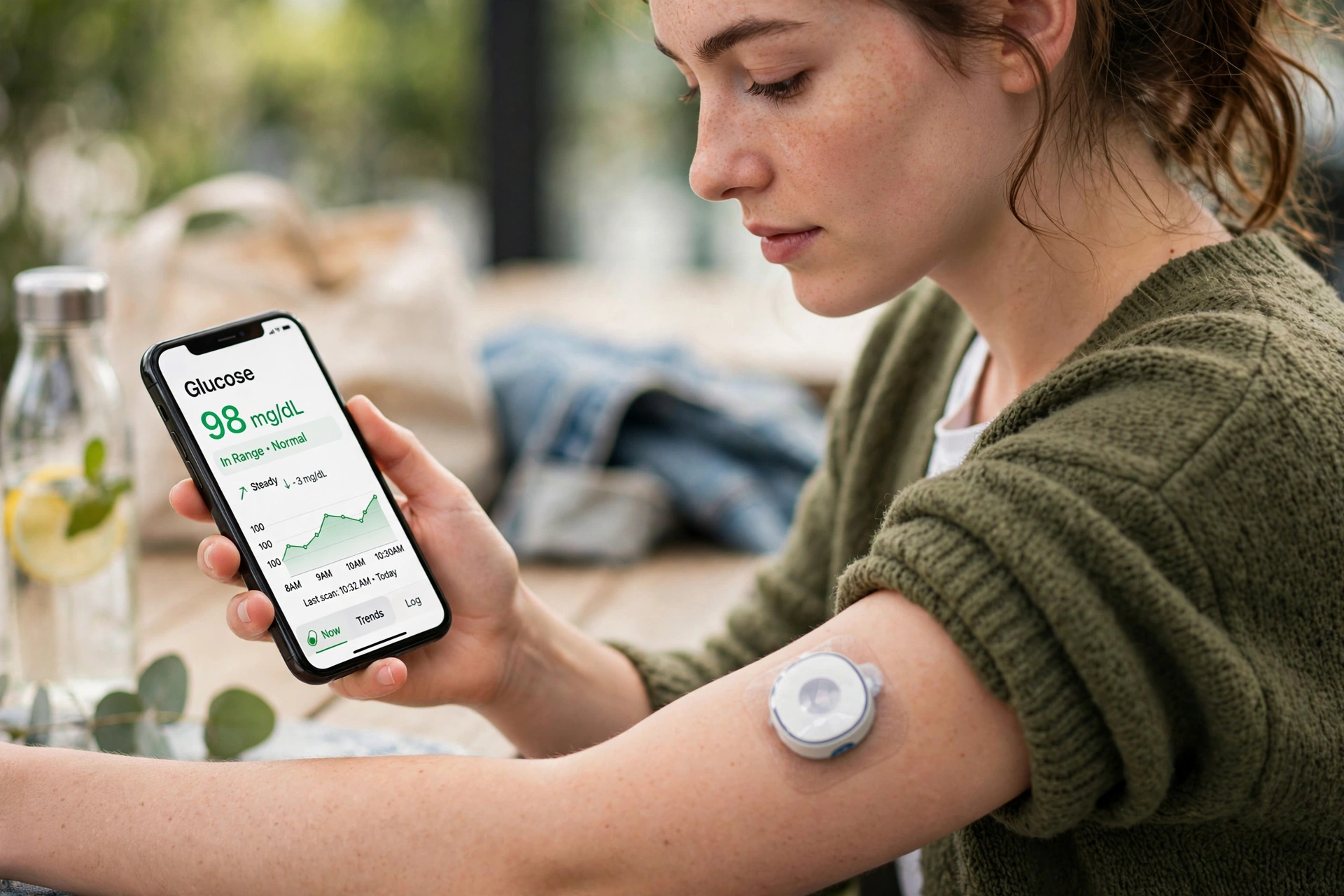
A small sensor worn on the arm could change daily life for millions of people with type 2 diabetes. The largest clinical trial of its kind, published in the New England Journal of Medicine, has found that continuous glucose monitors helped adults who do not use insulin spend approximately five more hours a day in their target blood sugar range — a difference researchers describe as both statistically strong and meaningful in everyday life.
What the trial actually tested
Continuous glucose monitors, often shortened to CGMs, measure sugar levels in the fluid under the skin every few minutes and send the readings to a phone or a small receiver. Until now, the strongest evidence for them came from people who use insulin, where the devices are already widely recommended. This trial focused on a much larger and less studied group: adults with type 2 diabetes managing their condition without insulin.
According to the University of Colorado Anschutz summary of the study, participants using a monitor spent roughly five more hours each day within their healthy target range than those relying on standard care. Results of that scale matter because time in range is closely linked to long-term complications affecting the eyes, kidneys, nerves and heart.
Why five hours is a big deal
Blood sugar management is a marathon of small decisions: what to eat, when to walk, how stress and sleep are affecting the body. Finger-prick tests give a snapshot a few times a day. A CGM gives the film instead of the photograph. Users can see a meal pushing levels up in near real time, watch a short walk bring them down, and spot overnight patterns that a morning test would never reveal.
That feedback loop is probably the real treatment. The sensor does not lower blood sugar by itself; it teaches. Over weeks, people learn which breakfasts keep them steady, how an evening meal affects the next morning, and when a reading is drifting in the wrong direction early enough to act. Five extra hours a day in range is what that learning looks like when it is measured across a large trial, the kind of rigorous evidence journals such as The New England Journal of Medicine are known for publishing.
Technology that fits into a normal phone
Part of the appeal is that CGMs ride on technology people already own. Readings sync to smartphone apps, trends can be shared with a care team, and alerts warn about highs and lows without any extra kit to carry. It is the same pattern seen across consumer health: sensors get smaller, batteries last longer, and the phone becomes the dashboard — one reason understanding how your phone handles storage and performance matters more for health apps than most people realise.
Improvements in battery chemistry will help the next generation of wearables too, as we noted in our coverage of solid-state batteries and what they mean for your next phone. Longer-lasting, smaller sensors are easier to forget you are wearing, and adherence is everything in a condition managed every single day.
Questions that still need answers
Enthusiasm should come with a few caveats. Sensors cost money, and whether health systems or insurers will fund them for people who do not use insulin is a policy decision this trial will inform but cannot settle. Not everyone finds wearing a sensor comfortable, and a stream of readings can cause anxiety for some users rather than confidence. Accuracy at the extremes, skin irritation and data privacy also deserve continuing attention as use expands.
There is also a human factor: a device only helps if someone acts on what it shows, ideally with support from clinicians who have time to review the data. Rolling out monitors without that support would waste much of what the trial demonstrated.
What this means if you live with type 2 diabetes
For readers managing type 2 diabetes without insulin, the sensible next step is a conversation, not a shopping trip. Ask your care team whether a monitor is appropriate for you, whether a short trial period is available locally, and what target range you should personally aim for. If you do try one, focus on patterns over weeks rather than reacting to every single reading.
The broader lesson is encouraging. Some of the most valuable medical technology does not arrive as a dramatic new drug, but as better information, delivered at the right moment, in a form people can actually use. Five more good hours a day, earned one small decision at a time, is exactly that kind of progress.

1 comentário
Pingback: Skilled Technicians Provide Confidence With Certified Sub Zero Repair Austin - Ezec Tech